Fact checking · Live
Kasagadi
Somewhere between a rumour and the truth there is a week of unpaid work. This is the system that organises it. Built for the Ghana Anti-Disinformation Coalition Project, run by Penplusbytes with funding from the Norwegian Ministry of Foreign Affairs.
Problem
The problem
A claim goes around Ghanaian WhatsApp and by the evening a few hundred thousand people have seen it. Checking it properly takes days of real research, and the people capable of doing that work have no route to it and no way to be paid for it.
So the checking either does not happen, or it happens in a newsroom nobody outside can see. The verdict, when it exists, arrives with no evidence attached and no way to tell how it was reached. Asking the public to trust a bare conclusion is exactly the problem that started this.
Audience
Who it is for
Members of the public
Saw something suspicious and wants to know whether it is true.
Accredited fact checkers
Has the skill to investigate. Wants assignments and a record of the work.
Editors and administrators
Triages what comes in, assigns it, and decides what gets published.
Anyone reading
Browses published verdicts without an account, and can see the evidence behind each one.
Solution
What we built
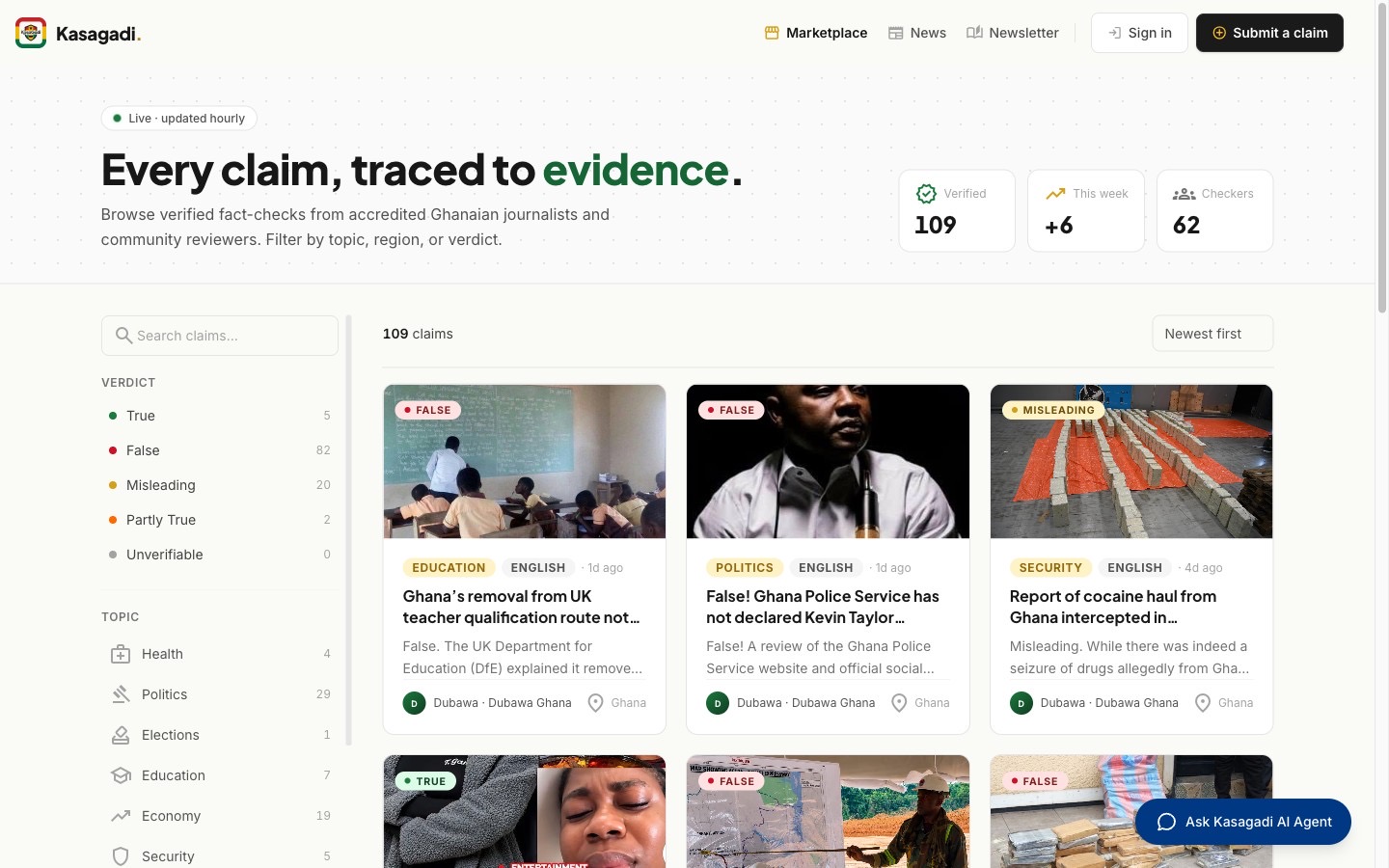
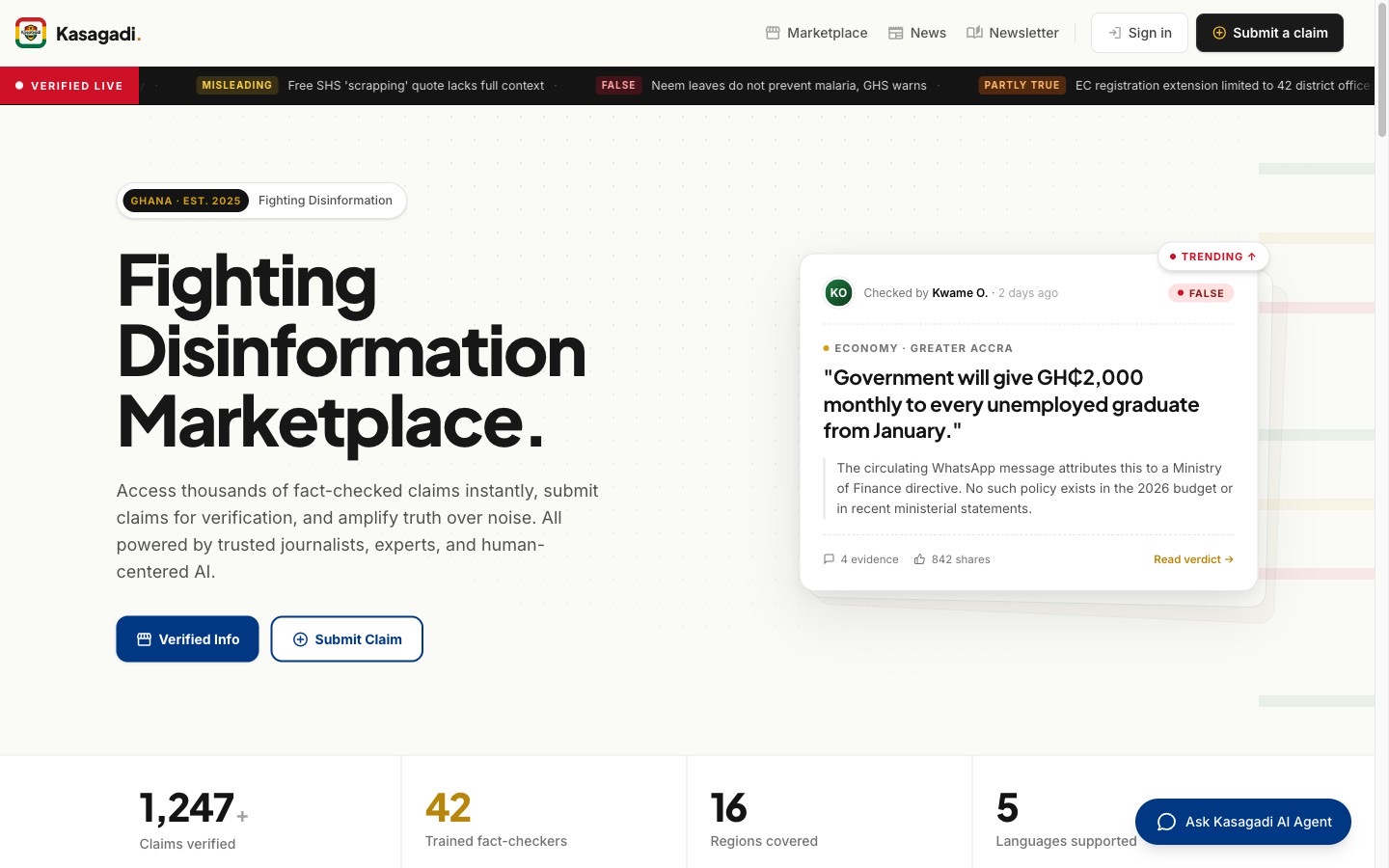
A marketplace with three roles. The public submits claims. Administrators triage them and assign them to accredited fact checkers. Checkers research, attach their evidence, and submit a verdict. An administrator approves it, and only then does it appear publicly.
The whole journey from a suspicious headline to a verdict with its research trail attached lives in one auditable system, so a reader can see not only the conclusion but how it was reached.
Engineering
Notable engineering
- A claim state machine governing submission, assignment, verdict and publication, with every transition recorded
- Three role types over one identity, driving both routing and authorisation
- Invitation only onboarding for fact checkers, since accreditation is the whole value
- An audit log covering every action taken on a claim
- Evidence attached to verdicts as first class records rather than pasted links
A verdict nobody can check is just another rumour with better manners.